
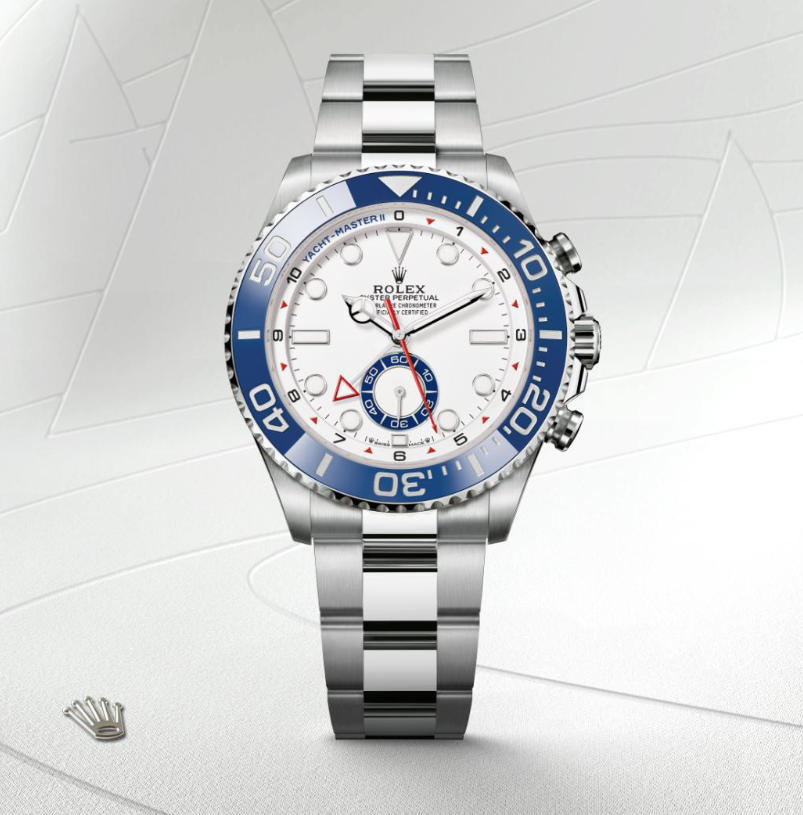
The Yacht-Master II has always been one of the stranger watches in the Rolex catalogue, and I mean that in a good way. The Submariner makes sense almost immediately. The GMT-Master II explains itself through its extra hour hand and 24-hour bezel. The Daytona is obviously a chronograph. The Yacht-Master II has never been quite so easy to read at first glance. It is large, bright and built around a countdown function created for the start of a yacht race, something most owners will probably never need in everyday life.That unusual character is exactly what makes the 2026 model interesting. Rolex has not tried to turn the Yacht-Master II into a more conventional sports watch. Instead, it has reworked the parts that made the old model unnecessarily difficult to understand while keeping the complication that gave the watch its identity in the first place.
The previous Yacht-Master II left the Rolex catalogue in 2024. Its return in 2026 is therefore more significant than the arrival of another reference number. The new generation comes as the Oystersteel Ref. 126680 and the yellow gold Ref. 126688, both retaining the familiar 44mm diameter. From a distance the white dial and blue ceramic bezel still make the watch unmistakably a Yacht-Master II, but a closer look reveals that the operating system, display and movement have all changed.
For readers following Rolex replica watches in the UK through ZZZX, that makes the new model particularly useful to examine. There is now a much clearer dividing line between the previous Yacht-Master II and the watch Rolex sells in 2026. A replica based on the older generation cannot accurately represent the new one simply by changing a hand or printing a different reference number on a listing.The Yacht-Master II first appeared in 2007 as a regatta chronograph. Its main function is not to measure an ordinary elapsed period but to count down the minutes before the beginning of a yacht race. The original system allowed a countdown between one and ten minutes to be programmed and stored mechanically, with the watch also able to synchronise the countdown while it was running.It was technically impressive, although using it required some explanation. On the previous watch, the Ring Command bezel was part of the programming process. The wearer had to rotate the bezel, operate a pusher and use the crown in the correct sequence before returning everything to its normal position. Once understood it worked well, but it was not a function most people were going to work out by simply picking up the watch.
The new Yacht-Master II removes much of that complexity from the user’s side. Programming is now handled through the lower pusher. Repeated presses move the countdown minute hand to the required starting value, and the selected duration remains mechanically memorised when the system is reset.That sounds like a small change until you compare the two systems. The old Yacht-Master II made the wearer interact with the bezel, crown and pushers to prepare the countdown. The current watch concentrates the operation around the two side pushers. The complication itself remains sophisticated, but using it no longer feels like a lesson in operating a piece of machinery.This is probably the most important idea behind the 2026 redesign. Rolex has not simplified what the watch can do. It has simplified the relationship between the watch and the person wearing it.
The New Dial Makes the Yacht Master II Easier to Read
The change is immediately visible on the dial. Earlier Yacht-Master II references placed the countdown scale in a large semicircular section inside the dial. It gave the watch a distinctive appearance, but it also meant that several different pieces of information were competing for attention in a relatively small space.The new generation moves the countdown scale to a flange running around the outer edge of the dial. It is graduated from ten down to zero, with triangular markings showing the half-minute positions. The centre of the dial consequently feels less crowded, even though the watch is still displaying a considerable amount of information.
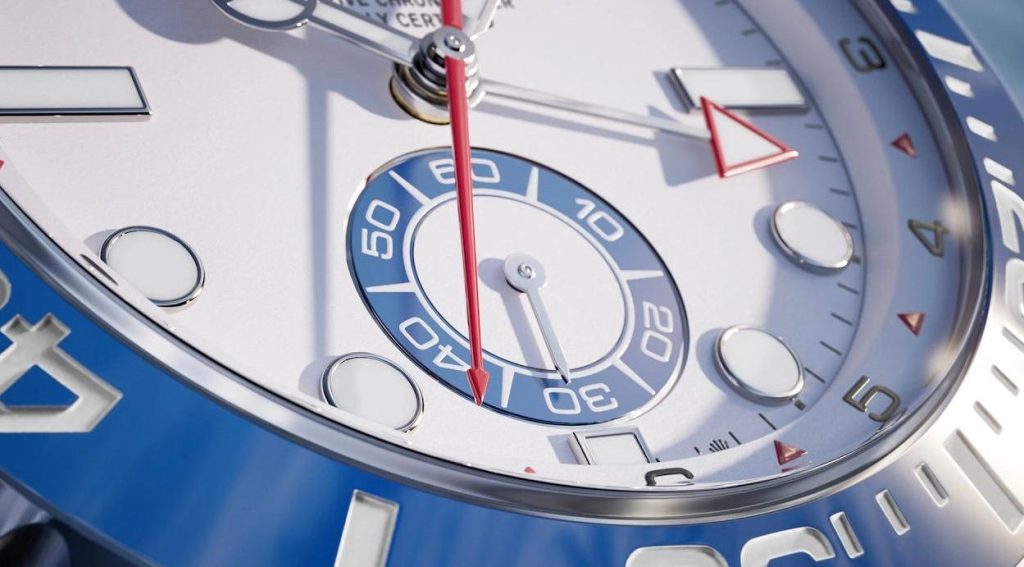
More importantly, the countdown minute and seconds hands now travel counterclockwise. It looks odd for the first few seconds because we are conditioned to expect hands to move clockwise, but in this case the direction makes perfect sense. The hands are physically moving towards zero as the remaining time disappears.That is one of the cleverest parts of the new display. The wearer no longer needs to interpret an ordinary forward-running indication as time remaining. The watch behaves visually like a countdown.For anyone comparing a 2026 Rolex Yacht Master II replica countdown display, this is now a fundamental detail rather than a minor one. A white dial, blue bezel and broadly correct case shape are not enough. The countdown scale belongs on the outer flange, its markings need to be positioned correctly and the relevant hands need to move in the proper direction.
The blue Cerachrom bezel looks familiar but its function has changed as well. On the previous generation it formed part of the Ring Command programming system. The new Yacht-Master II uses a bidirectional 60-minute graduated bezel instead. The first thirty minutes are individually marked, allowing the final thirty seconds of the countdown to be read against the bezel as the seconds hand travels backwards towards zero.This is the kind of difference that can easily disappear in online product photographs. From directly above, an older-style replica may still look recognisably like a Yacht-Master II. Once the bezel markings and countdown operation are compared, however, the distinction between generations becomes much clearer.The 2026 Rolex Yacht Master II blue Cerachrom bezel should therefore be treated as part of a completely revised display rather than simply as the familiar blue ring surrounding the dial.
The case deserves similar attention. Rolex has kept the diameter at 44mm, but diameter alone never tells the full story of how a watch looks on the wrist. The middle case has been reshaped, the bracelet has been widened slightly and the Oysterlock clasp is slimmer. Together these changes help a very large watch look more coherent rather than simply more imposing.This is something replica comparisons often miss. Two watches can both measure 44mm and still look noticeably different because of the lugs, thickness of the middle case, width of the bracelet or height of the bezel. On a Rolex Yacht Master II replica with correct case proportions, those relationships are often more revealing than the number quoted for case diameter.
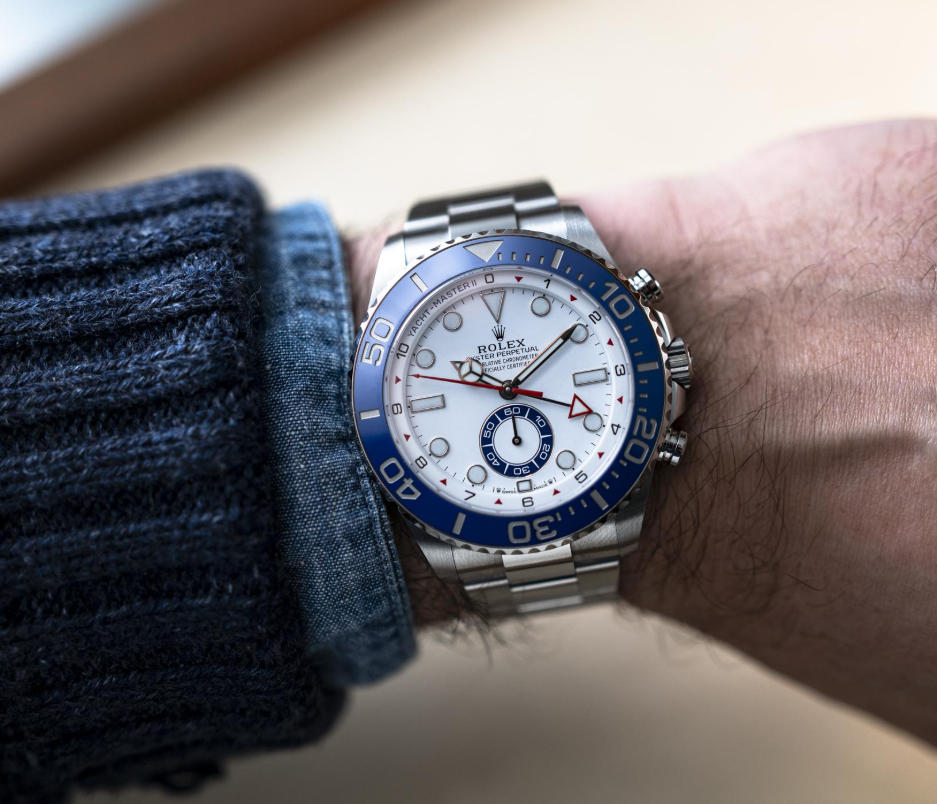
The new pushers also give the watch a more deliberate nautical character. Their shape draws inspiration from sailing winches, but they are not there purely for decoration. Because the countdown is now controlled through the pushers, their design and operation have become more important than before.Seen as a whole, the redesign feels more coherent. The old Yacht-Master II always had an interesting complication, but the dial, bezel and operating system sometimes made that complication harder to understand than it needed to be. On the new watch, those parts now seem to be working toward the same goal.
Calibre 4162 Is Where the Redesign Becomes More Than Cosmetic
The new Yacht-Master II is powered by Calibre 4162, and this is where the difference between a redesign and a simple facelift becomes obvious. Rolex could not change the way the countdown is programmed without changing the mechanism responsible for it.Calibre 4162 is an evolution of the previous Calibre 4161, but its countdown programming system has been reworked around the new pusher-operated controls. It still retains the mechanical memory that allows the selected countdown duration to be recalled after a reset, and it continues to use a column wheel and vertical clutch for the chronograph function.The movement also incorporates Rolex’s Chronergy escapement, blue Parachrom hairspring and Paraflex shock absorbers. Power reserve is approximately 72 hours.Those specifications apply to the genuine Rolex movement. They should not automatically be repeated as specifications for a replica simply because a product description uses phrases such as clone 4162, Swiss movement or identical movement.That distinction matters more here than it does on a simple three-hand watch. The Yacht-Master II has a highly specific mechanical function. Reproducing the position of the hands is one thing; reproducing the way those hands are programmed, synchronised, reset and mechanically memorised is considerably more difficult.
If I were comparing a Rolex Yacht Master II replica movement and countdown function, the first thing I would want to see is the watch operating rather than a photograph of the movement or a list of impressive sounding specifications.Does pressing the lower pusher actually programme the countdown minute by minute? Do both countdown hands move counterclockwise? Does the watch retain the programmed duration after a reset? Can the countdown be synchronised while it is running? Those questions tell you much more about how closely a replica follows the new Yacht-Master II than a factory label ever will.The same principle applies to the exterior. The Oystersteel Ref. 126680 has the cleaner, more familiar combination of steel, white dial and blue bezel. The yellow gold Ref. 126688 takes the same design in a much more expressive direction. The dimensions are shared, but the amount of polished yellow gold gives the second watch substantially more visual weight.
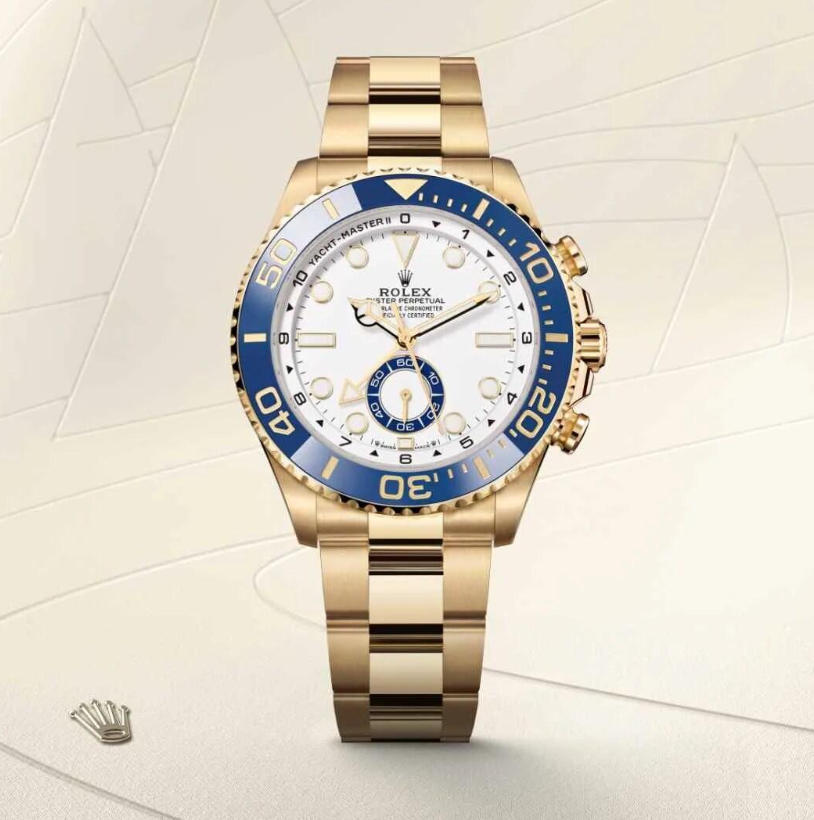
Both use Rolex’s Oyster case architecture and are rated to 100 metres of water resistance. Both also use the three-link Oyster bracelet with an Oysterlock safety clasp and Easylink comfort extension.
For replica buyers, these specifications need to be separated from visual resemblance. A gold-coloured 126688-style replica is not equivalent to an 18 ct yellow gold Rolex simply because the shade looks convincing in photographs. Likewise, a bracelet shaped like an Oyster bracelet may differ considerably in link construction, clasp quality and finishing.That is why the most useful comparison is usually the least glamorous one. Ignore the broad quality claims for a moment and examine the watch piece by piece. Look at how the end links meet the case. Check the width of the bracelet against the lugs. Compare the pusher shape. Study the countdown flange. Look at the bezel markings and, if possible, watch the countdown operate in a video.
ZZZX approaches Rolex replicas from that perspective because a familiar silhouette alone does not tell you very much about construction. Our Rolex watch knowledge section goes further into cases, bezels, bracelets and movements for readers who want to understand why these details matter when comparing different watches.The return of the Yacht-Master II also says something interesting about Rolex itself. The company could have allowed the model to disappear after 2024. It had always been a niche watch, even within the Professional collection, and its regatta function is far more specialised than the complications found on most Rolex models.Instead, Rolex brought it back with the unusual part intact.
That decision is important. The company did not turn it into a conventional chronograph or reduce it to another sports watch with a blue ceramic bezel. The countdown remains the reason the Yacht-Master II exists. What changed was the way that function is communicated.The old model often made its technical complexity visible before it made its purpose clear. The new model reverses that. The display is cleaner, the controls are easier to understand and the hands physically move towards zero. The engineering underneath is still complicated, but the experience on the wrist feels simpler.Most people who own a Yacht-Master II will probably never use it during the start of an actual yacht race. That does not make the complication pointless. Mechanical watches have never depended entirely on practical necessity. Part of their appeal is seeing a specialised mechanical solution executed well, even when everyday life rarely demands it.The Yacht-Master II is perhaps a clearer example of that idea than most Rolex watches. It is not trying to be the most versatile watch in the catalogue. It is deliberately large, visually distinctive and mechanically unusual.
For UK readers interested in Rolex replicas, the 2026 generation is therefore worth treating as a genuinely new reference rather than another variation of the familiar blue and white model. The case proportions have changed, the dial has been reorganised, the bezel has a different role and the countdown now works through an entirely revised operating system.That also makes it harder to reproduce convincingly. With some Rolex models, a replica can be judged reasonably well from a good set of photographs. With the new Yacht-Master II, some of the most important differences only become apparent when the watch is in motion.And that may be the best way to understand what Rolex has achieved here. The Yacht-Master II has not become less complicated. It has simply stopped making the wearer work so hard to understand why the complication exists.For a watch that has always been known for doing something unusually specific, that feels like a much more meaningful improvement than changing the colour of a dial or adding another reference to the catalogue.