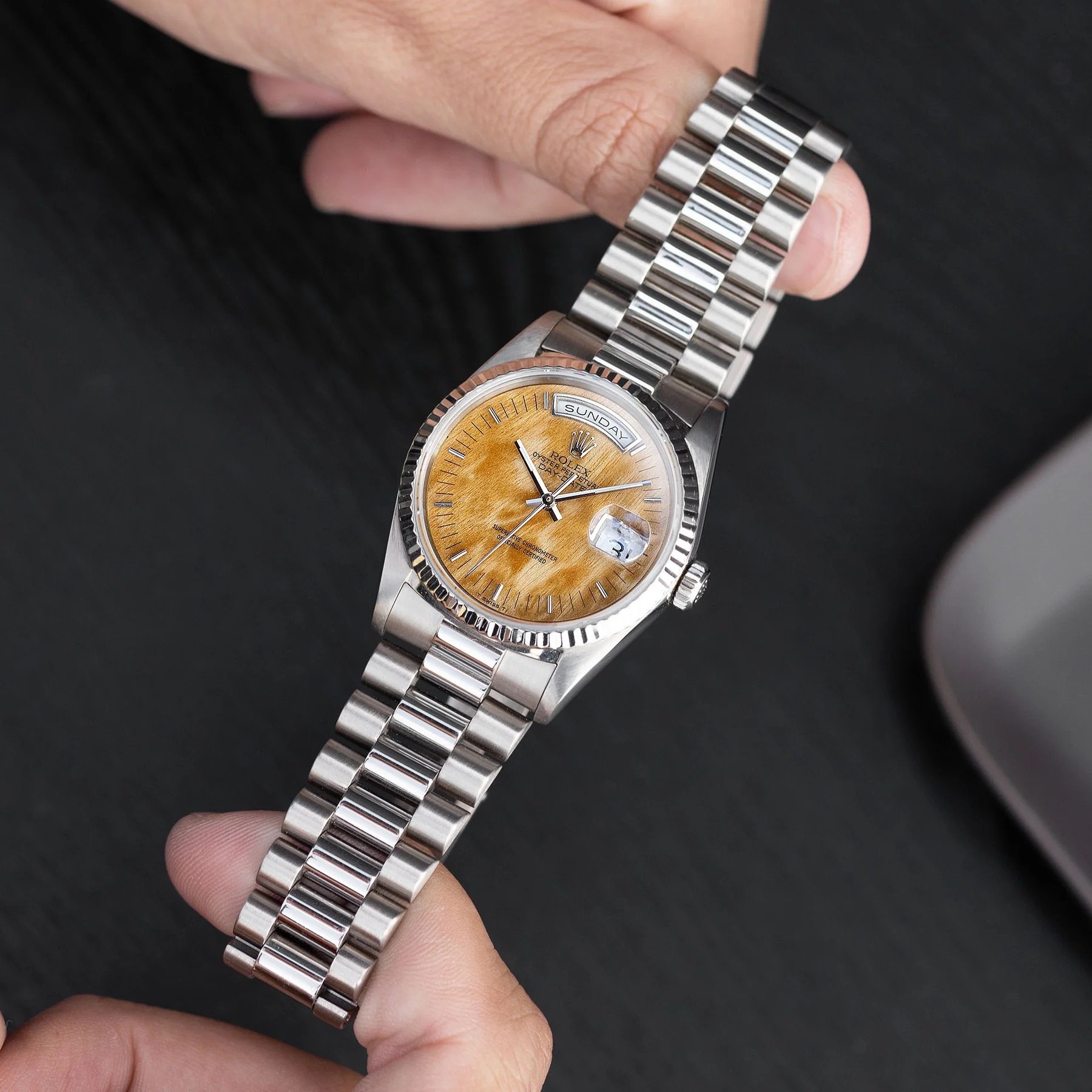
Looking at Rolex replica watches in 2026 is quite different from reading the listings that surrounded them a few years ago. Product photographs are better, descriptions are longer and terms such as clone movement, Swiss grade and 1:1 appear almost everywhere. The difficulty is that those labels do not necessarily tell you very much about the watch itself.
A useful comparison starts with the details you can actually examine. Case proportions, dial spacing, bezel construction, bracelet finishing and movement behaviour usually reveal far more than a broad claim about quality.
That is the approach we take at ZZZX. As a UK Rolex replica watch blog, the aim is not to repeat seller language but to understand why one version can look convincing while another begins to feel wrong when you spend more time with it.
The first step is knowing exactly which Rolex model you are looking at. A Submariner, Datejust, Daytona and Day-Date may all carry the same name on the dial, but the things worth checking are very different.
A Submariner depends heavily on the relationship between its case, crown guards, rotating bezel and Oyster bracelet. On a Datejust, the fluted bezel, date magnification and Jubilee bracelet can influence the whole appearance. A Daytona introduces chronograph registers and pushers, while the Day-Date adds a full day display and the distinctive President bracelet.
This is why a general claim such as “top quality Rolex replica” is not especially helpful. Quality has to be judged against the individual reference rather than against a marketing label.
Start With Proportion Before Looking at Small Details
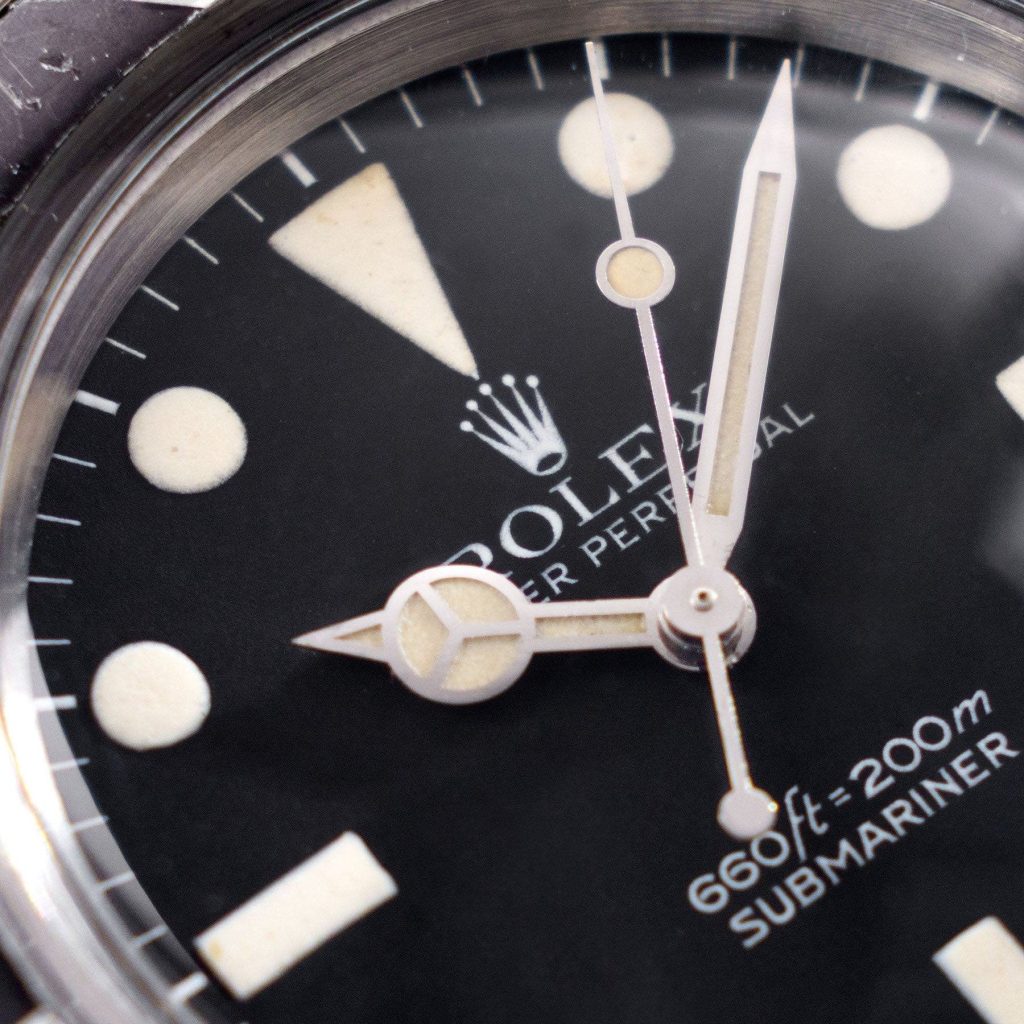
The easiest mistake to make is concentrating immediately on the logo or dial printing. Those details matter, but the basic proportions of the watch usually have a greater effect on how convincing it appears.
Look at the thickness of the case, the length and shape of the lugs, the size of the crown and the way the bracelet meets the case. On sports models, crown guards can be particularly revealing. If they are too thick or too narrow, the profile of the watch changes even if the dial itself looks reasonably accurate.
The same principle applies to bezel height. Ceramic Submariner and GMT-Master II bezels should feel integrated into the case rather than sitting noticeably above it. Fluted bezels on Datejust and Day-Date references depend on the angle and depth of each section to reflect light correctly.
For anyone comparing Rolex replica watch case proportions in the UK, photographs taken directly from the front and side are generally more useful than heavily angled advertising images. A dramatic photograph can make a thick case appear slimmer or hide an awkward transition between the lugs and bracelet.

The dial is usually the next place to look. Rolex designs often appear simple, which means small errors have fewer places to hide.
Check whether the hour markers sit at consistent distances from the minute track. Look at the length of the hands and whether they reach the correct parts of the dial. On models with a date window, consider the alignment of the date itself as well as the magnification produced by the Cyclops lens.
Text is worth examining too, but it should not become an obsession. Slight differences in printing can matter, although poor spacing between major dial elements is usually more noticeable than tiny differences in a letter seen under magnification.
Colour is another area where online comparisons become difficult. Rolex has produced everything from straightforward black and white dials to sunburst green, champagne, blue and mother of pearl finishes. Strong studio lighting can change how these surfaces appear.
A Rolex replica dial viewed in natural daylight may look very different from the same watch under bright seller photography. Whenever possible, it is useful to compare photographs taken under several lighting conditions rather than relying on a single image.
Bracelets deserve the same attention. They make up a large part of the watch and have a considerable influence on how it feels on the wrist.
Rolex primarily uses familiar bracelet styles such as Oyster, Jubilee and President, but reproducing the overall shape is only the beginning. Link articulation, taper, end-link fit, clasp construction and the transition between polished and brushed surfaces all matter.
A bracelet that rattles excessively, has sharp edges or does not meet the case cleanly can undermine an otherwise good-looking watch. Conversely, a well-finished bracelet can make a relatively simple design feel much more convincing.

Movement Claims Need More Attention Than Marketing Names
Movement descriptions are one of the least consistent parts of the replica watch market. Terms such as Swiss movement, clone calibre and Asian automatic can be used in different ways depending on who is describing the watch.
For that reason, it is better to ask what the movement actually does.
On a straightforward three-hand model, consider timekeeping, winding feel and date operation. A GMT-Master II raises questions about how the additional hour hand is adjusted. A Daytona requires closer attention because the chronograph mechanism and sub-dial functions can vary substantially between movements.
A Day-Date presents a different challenge again. The day and date should change correctly, but the setting process does not necessarily work in exactly the same way as the genuine Rolex calibre.
This is why Rolex replica movement specifications and functions should be considered separately from appearance. A watch can look close to a particular reference while using a completely different internal construction.
Serviceability also matters. An exotic movement can sound appealing in a listing, but that advantage becomes less useful if replacement parts are difficult to find or no local watchmaker is willing to work on it.
The Submariner remains one of the easiest Rolex families to recognise. Its black or coloured bezel, luminous markers and Oyster bracelet create a design that has changed gradually rather than dramatically.
That familiarity is helpful when comparing replicas because obvious changes in case shape, bezel width or marker size tend to stand out quickly.
The Datejust requires a different eye. Its attraction often comes from the relationship between a relatively simple case and more decorative choices such as a fluted bezel, Jubilee bracelet or sunburst dial. Poorly executed finishing can therefore make a larger difference than a specification sheet suggests.
The Daytona is more complicated. Three subsidiary dials, chronograph pushers and a densely arranged face create more areas where proportions can drift. When looking at a Daytona replica, the position and function of the registers deserve just as much attention as the bezel and bracelet.
The GMT-Master II has another distinctive feature: its rotating 24-hour bezel and additional hour hand. Colour combinations such as the red and blue Pepsi or blue and black designs make bezel colour and transition particularly easy to notice.
The Day-Date is visually quieter but not necessarily easier to reproduce. The full day window at 12 o’clock, date at three and President bracelet all need to sit within a balanced design. Because there are fewer distracting elements, incorrect spacing can become surprisingly obvious.

None of these models can reasonably be reduced to one universal quality grade. A factory or production run that handles one reference well may not necessarily reproduce another with the same accuracy.
This is also why ZZZX avoids treating phrases such as 1:1, AAA or super clone as objective measurements. Unless those terms are tied to specific materials, dimensions and movement information, they are primarily marketing language.
Materials deserve similar caution. Stainless-steel grades, sapphire crystals, ceramic components and gold-coloured finishes are often mentioned in listings, but a written claim alone does not prove what has actually been used.
Gold is a particularly clear example. A gold-coloured case, plated case and solid-gold case are completely different things even if they look similar in a carefully lit photograph.
The same applies to gemstone watches. Synthetic decorative stones may reproduce the general appearance of a gem-set Daytona or Day-Date without having the composition, optical properties or value of the materials used by Rolex.
Rather than assuming that a replica shares the specification of the genuine model, it is safer to treat every material claim as something that needs independent verification.
Price should also be kept in perspective. A more expensive watch is not automatically more accurate, and a cheaper one is not automatically poor. What matters is whether the price makes sense for the movement, construction, finishing and level of support actually being offered.
For a broader checklist covering cases, dials, movements, bracelets and seller information, our Buying Advice page explains the approach we use when discussing replica watches on the site.
It is also worth remembering that photographs have limits. They can help you judge proportions, colours and finishing, but they cannot reliably tell you how a movement performs, how a clasp feels after repeated use or whether a particular material claim is accurate.
Videos can add useful information, especially when they show the crown, date change, GMT hand or chronograph operating in real time. Even then, one example does not guarantee that every watch from the same production batch will behave identically.
In 2026, the most useful way to approach Rolex replicas is therefore quite simple: ignore the loudest claims first and look at the watch itself.
Start with the correct reference. Study the proportions. Examine the dial and bezel in ordinary lighting. Look at the bracelet and clasp rather than treating them as secondary details. Find out what movement is actually inside and what its functions are supposed to do.
Most importantly, separate observable details from advertising language.
A convincing replica is rarely convincing because of one impressive specification. It usually comes from a series of smaller decisions being handled consistently, from the shape of the case to the spacing on the dial and the way the bracelet meets the wrist.
That is a much more useful way to compare Rolex replica watches than searching for a single label that promises everything.